

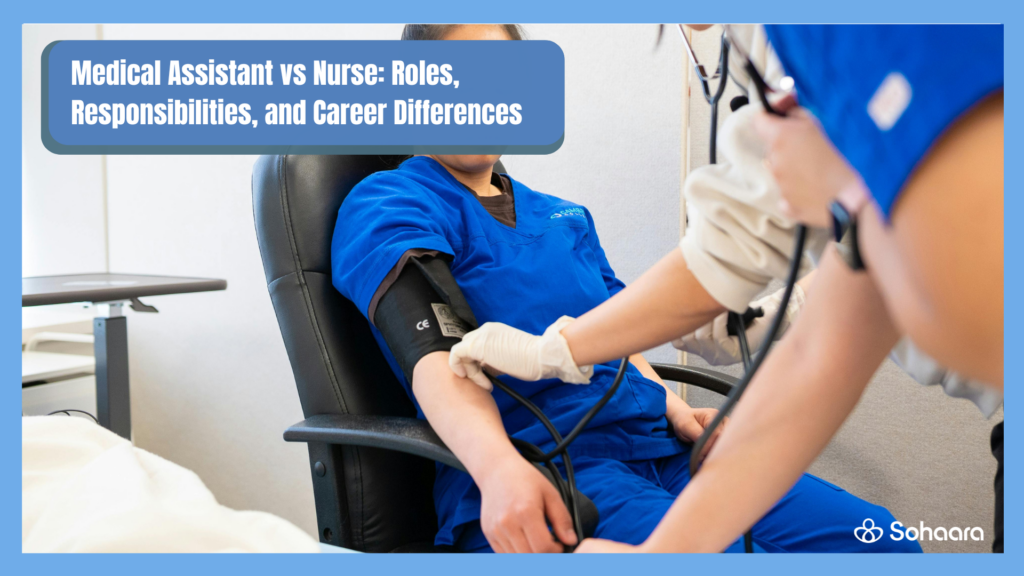
Healthcare careers often attract people who want to work closely with patients while being part of a fast-paced, purpose-driven environment. Among the many roles in the field, medical assistants and nurses are two of the most visible professionals patients encounter during a medical visit.
Because both interact with patients, assist physicians, and work in similar healthcare settings, many people assume their roles are nearly the same. In reality, the comparison of medical assistant vs nurse reveals clear differences in responsibilities, training pathways, and the level of involvement in clinical care.
Understanding these distinctions is especially important for individuals considering a career in healthcare. The choice between these paths can influence how quickly you enter the workforce, the type of work you perform each day, and the opportunities available for long-term career advancement.
This article discusses the key differences between these two healthcare roles, from responsibilities and training requirements to career prospects. So you can clearly understand what sets them apart and which path may align best with your goals.
Key Takeaway from Sohaara’s Article
- Medical assistants handle administrative and basic clinical duties, while nurses focus on advanced patient care, treatment execution, and care coordination
- The key differences between medical assistants and nurses lie in scope of practice, level of patient care, clinical responsibilities, and decision-making authority
- Medical assistants have a limited scope with supportive tasks, whereas nurses operate with greater autonomy, deliver hands-on care, and make critical clinical decisions
- Medical assisting requires shorter, skill-focused training, while nursing demands formal education, licensing, and extensive clinical preparation
- Nursing offers stronger long-term career growth, specialization, and leadership opportunities, while medical assisting provides faster entry into the healthcare workforce
What Is a Medical Assistant?
A medical assistant is a healthcare professional who supports physicians and clinical teams with both administrative and basic clinical tasks. They help ensure that medical facilities operate efficiently while patients receive timely and organized care.
Medical assistants often act as the first point of contact for patients, assisting with coordination, documentation, and routine procedures. Roles and responsibilities of a medical assistant combine patient interaction, clinical support, and office management within healthcare settings.
Types of Medical Assistants
Medical assistants can specialize in different areas depending on the type of healthcare facility they work in and the responsibilities they handle. While many perform a mix of tasks, some focus on specific functions within a medical practice.
- Clinical Medical Assistants – These professionals focus on patient care tasks. Their duties often include measuring vital signs, preparing patients for examinations, assisting physicians during procedures, and collecting laboratory samples.
- Administrative Medical Assistants – Administrative medical assistants primarily manage front-office operations. They schedule appointments, maintain patient records, handle insurance documentation, and coordinate communication between patients and healthcare providers.
- Specialty Medical Assistants – Some medical assistants work in specialized medical fields such as dermatology, cardiology, pediatrics, or ophthalmology. Their tasks may involve assisting with procedures specific to that specialty and supporting physicians with specialized equipment or treatments.
Key Responsibilities of Medical Assistants
Medical assistants handle a combination of administrative and clinical duties that help healthcare facilities run smoothly. Medical assistant responsibilities may include:
- Scheduling patient appointments and managing clinic calendars
- Recording patient information and updating medical records
- Measuring vital signs such as blood pressure, temperature, and pulse
- Preparing patients for examinations and medical procedures
- Assisting physicians during routine examinations
- Collecting laboratory samples for testing
- Managing basic billing documentation and insurance verification
- Providing patients with instructions on medications or follow-up care
What is a Nurse?
A nurse is a licensed healthcare professional responsible for providing direct patient care, monitoring health conditions, and supporting medical treatment plans. Nurses assess patients, administrate with medications, and ensure patients receive proper care throughout their treatment. They work closely with physicians and other healthcare professionals to manage patient health and recovery. Their role requires clinical knowledge, critical thinking, and strong patient care skills.
Types of Nurses
Nursing includes several roles based on education level, licensing, and clinical responsibilities. The most common types include:
- Licensed Practical Nurse (LPN) / Licensed Vocational Nurse (LVN) – Provides basic patient care such as monitoring vital signs, assisting with daily patient needs, and supporting registered nurses and physicians.
- Registered Nurse (RN) – Delivers comprehensive patient care, administers medications, performs health assessments, and develops patient care plans.
- Nurse Practitioner (NP) – An advanced practice nurse who can diagnose illnesses, prescribe medications, and manage patient treatment plans in many healthcare settings.
Core Responsibilities of Nurses
Nurses perform a wide range of clinical duties focused on patient care and treatment. Their responsibilities typically include:
- Assessing and monitoring patients’ health conditions
- Administering medications and treatments prescribed by physicians
- Recording and maintaining detailed patient health records
- Assisting in medical procedures and treatments
- Developing and implementing patient care plans
- Educating patients and families about health conditions and recovery
- Monitoring patient progress and reporting changes to physicians
- Providing emotional support and guidance to patients during treatment

Medical Assistant vs Nurse: Key Differences at a Glance
While both medical assistants and nurses play important roles in patient care, their responsibilities, training, and authority within healthcare settings differ significantly. Understanding these differences helps clarify how each role contributes to the overall healthcare team and patient care process.
- Scope of Practice
The scope of practice for medical assistants is generally limited to supportive tasks that help physicians and clinical staff manage patient care efficiently. They perform routine clinical procedures and administrative duties under the supervision of healthcare providers.
Nurses, however, have a broader scope of practice. Depending on their qualification level, they can assess patient conditions, administer treatments, manage care plans, and play a direct role in clinical decision-making within healthcare teams.
- Level of Patient Care
Medical assistants typically provide basic patient support, such as preparing patients for examinations, recording vital signs, and assisting with routine procedures. Their role focuses on facilitating the care process rather than managing it.
Nurses provide a deeper level of patient care. They monitor patient conditions, administer medications, assist with treatments, and ensure patients receive appropriate care throughout their treatment and recovery.
- Decision-Making Authority
Medical assistants usually work under the direct supervision of physicians or nurses and follow established clinical instructions. Their role involves carrying out assigned tasks rather than making independent medical decisions.
Nurses have greater responsibility in patient care management. Registered nurses, for example, regularly assess patient conditions, prioritize care needs, and make informed decisions related to patient treatment and monitoring.
- Clinical Responsibilities
Medical assistants support clinical operations by handling routine tasks that prepare patients and assist healthcare providers. These tasks may include taking vital signs, preparing examination rooms, collecting samples, and documenting patient information.
Nurses handle more advanced clinical responsibilities. Their work often includes administering medications, performing patient assessments, monitoring treatment progress, assisting in complex procedures, and coordinating patient care within the healthcare team.
Medical Assistant vs Nurse: Differences in Education and Training Requirements
One of the most significant differences between these two healthcare roles lies in the level of education and training required. The learning pathway, duration of training, and licensing requirements vary considerably, which directly affects the responsibilities each professional can perform in a healthcare setting. Below is a breakdown of medical assistant vs nurse comparison on the basis of educational and training requirements.
Education Needed to Become a Medical Assistant
Medical assistants typically complete a certificate, diploma, or associate degree program in medical assisting. These programs usually take 9 months to 2 years to complete and focus on both administrative and basic clinical skills.
Training programs generally cover topics such as:
- Medical terminology
- Basic anatomy and physiology
- Clinical procedures and patient care
- Medical billing and coding
- Electronic health records management
Many programs also include hands-on clinical training or externships, allowing students to gain practical experience in real healthcare environments.
Education Needed to Become a Nurse
Becoming a nurse requires more extensive education and clinical training. The most common nursing education pathways include:
- Licensed Practical Nurse (LPN) / Licensed Vocational Nurse (LVN) – Requires completion of a practical nursing program, typically taking about 1 year.
- Associate Degree in Nursing (ADN) – A 2-year degree that prepares graduates to become registered nurses.
- Bachelor of Science in Nursing (BSN) – A 4-year degree that provides more comprehensive training and often opens doors to advanced career opportunities.
Nursing programs involve intensive coursework in patient care, pharmacology, clinical assessment, and medical procedures, along with extensive clinical training in healthcare facilities.
Certifications and Licensing Requirements
Certification and licensing requirements also differ between the two roles.
- Medical assistants are not always required to hold a license, but many choose to obtain professional certifications to improve their job prospects. Common certifications include Certified Medical Assistant (CMA) or Registered Medical Assistant (RMA).
- Nurses, however, must obtain a professional license before practicing. Registered nurses are required to pass the NCLEX-RN licensing examination, while practical nurses must pass the NCLEX-PN exam. Licensing ensures that nurses meet standardized competency requirements for patient care.

Skills Required to Become A Medical Assistant or Nurse
Both medical assistants and nurses need a combination of technical knowledge and interpersonal abilities to work effectively in healthcare environments. While the level of responsibility may differ, both roles require strong communication in Medical English, attention to detail, and the ability to work closely wit/h patients and medical teams.
Developing the right skills helps professionals deliver quality patient care while maintaining efficiency in busy healthcare settings.
Essential Skills for Medical Assistants
Medical assistants need a balanced set of administrative and clinical skills to support daily healthcare operations. Important skills include:
- Organizational skills to manage appointments, records, and patient coordination
- Learning Medical English to interact clearly with patients, physicians, and staff
- Basic clinical skills such as measuring vital signs and preparing patients for exams
- Administrative skills for handling documentation, billing, and medical records
- Attention to detail when recording patient information and medical data
- Time management to handle multiple tasks in fast-paced clinical environments
Essential Skills for Nurses
Nurses require more advanced clinical and decision-making skills because they are directly responsible for patient care and treatment management. Key skills include:
- Clinical assessment skills to evaluate and monitor patient health conditions
- Critical thinking to make informed decisions about patient care
- Patient care skills for administering treatments and monitoring recovery
- Communication skills to explain treatments and coordinate with healthcare teams
- Problem-solving abilities to respond quickly to medical situations
- Emotional resilience and empathy to support patients during stressful health conditions
Medical Assistant vs Nurse: Salary Comparison and Job Outlook
Salary differences between medical assistants and nurses mainly reflect the level of training, licensing requirements, and clinical responsibilities involved in each role. Nurses typically earn higher salaries because they perform more advanced patient care tasks and require professional licensing.
However, medical assistants often enter the workforce faster due to shorter training programs. Both roles remain in demand as healthcare systems continue expanding services and patient care facilities.
Average Salary of Medical Assistants
Medical assistants in Saudi Arabia generally earn around SAR 4,000 per month on average, though salaries can vary depending on experience, certifications, and the healthcare facility. Entry-level roles may start around SAR 2,300 per month, while experienced professionals can earn up to SAR 10,000 per month in some healthcare settings.
Average Salary of Nurses
Nurses earn significantly higher salaries due to their advanced clinical responsibilities and licensing requirements. In Saudi Arabia, the average salary for a registered nurse is about SAR 6,000–10,000 per month, with some experienced or specialized nurses earning up to SAR 13,000 or more depending on their role and specialization.
Factors That Affect Earnings
Several factors can influence how much medical assistants and nurses earn, including:
- Education level and professional certifications
- Years of clinical experience
- Type of healthcare facility (hospital, clinic, private practice)
- Geographic location or city
- Medical specialization or department
These factors often determine how salaries progress over time and the earning potential within each healthcare career path.
Which Career Should You Choose?
Both roles contribute significantly to patient care, but they differ in training requirements, level of responsibility, and career progression. Understanding what each role involves can help you decide which path aligns best with your professional interests and lifestyle expectations.
When a Medical Assistant Career May Be the Right Fit
- If you want to enter the healthcare field quickly with shorter training programs.
- If you enjoy balancing administrative tasks and basic clinical duties.
- If you prefer working in outpatient clinics or physician offices.
- If you want to gain healthcare experience before pursuing advanced medical roles.
- If you are looking for a flexible entry point into the healthcare industry.
When Nursing May Be a Better Career Path
- If you want to take on direct and advanced patient care responsibilities.
- If you are willing to commit to longer education and licensing requirements.
- If you want opportunities to specialize in different medical fields.
- If you are interested in leadership, advanced practice, or clinical decision-making roles.
- If you aim for higher long-term earning potential in healthcare.
Factors to Consider Before Choosing
- Length and cost of education and training programs.
- Level of responsibility you want in patient care.
- Work environments you prefer, such as clinics, hospitals, or specialized facilities.
- Salary expectations and career advancement opportunities.
- Your long-term goals within the healthcare industry.
Conclusion
Healthcare runs on collaboration, and medical assistants and nurses represent two critical parts of that system. While one role focuses on keeping clinical operations efficient, the other leads patient care and treatment management. Understanding these differences between roles of medical assistants and nurses helps clarify where your strengths and ambitions fit best. Ultimately, the right career is the one that aligns with the impact you want to create in healthcare.
Build Your Healthcare Career with Recruiter Connections on Sohaara
Sohaara is a globally known upskilling and networking platform designed to bridge the gap between training and employment. We prepare medical assistants and nurses to meet real-world job expectations through focused Medical English training programs and workplace communication skills. This ensures candidates are not just qualified on paper, but confident and job-ready in clinical and professional environments.
We also strengthen hiring outcomes through a network-driven model that connects trained candidates with healthcare recruiters actively seeking qualified talent. Each profile reflects verified skills, role readiness, and communication capability, making it easier for employers to identify the right fit without friction. This alignment supports faster shortlisting and more efficient hiring decisions.
We bring learning and recruitment into a single, outcome-oriented ecosystem. Candidates gain practical skills that match industry expectations, while recruiters access a pipeline of prepared professionals ready to contribute from day one. The result is a more reliable path to employment for candidates and a more effective hiring process for healthcare organizations.

Frequently Asked Questions
1. Can a medical assistant become a nurse later in their career?
Yes, many healthcare professionals start as medical assistants and later pursue nursing education. The experience gained in clinical settings can provide a strong foundation for nursing studies and patient care responsibilities.
2. Do medical assistants and nurses work together in the same healthcare team?
Yes, medical assistants and nurses often work closely together. Medical assistants typically handle preparatory clinical tasks and administrative coordination, while nurses focus on patient assessment, treatment, and care management.
3. Which role has more patient interaction: medical assistants or nurses?
Both roles interact with patients regularly, but the nature of interaction differs. Medical assistants usually handle initial patient preparation and administrative communication, while nurses provide more direct care and ongoing treatment support.
4. Is it easier to enter the healthcare field as a medical assistant or a nurse?
Becoming a medical assistant is generally faster because training programs are shorter and licensing requirements are less extensive. Nursing requires longer education and licensing but offers broader responsibilities and career opportunities.
5. Is the work schedule different for medical assistants and nurses?
Yes, work schedules can differ. Medical assistants often work standard daytime hours in clinics, while nurses, especially those in hospitals, may work rotating shifts, nights, weekends, or longer shifts depending on the healthcare facility.
6. Which role is more physically demanding: medical assistant or nurse?
Nursing is generally more physically demanding because nurses often assist patients with mobility, monitor patients for extended periods, and handle more intensive clinical responsibilities.
7. Do medical assistants handle patient documentation like nurses?
Both roles document patient information, but the level of documentation differs. Medical assistants typically record basic patient data and vital signs, while nurses maintain detailed clinical records related to treatment, medications, and patient progress.
8. Which role is better for someone interested in healthcare administration?
Medical assisting can be a strong starting point for those interested in healthcare administration because the role often involves scheduling, documentation, and office management tasks that are relevant to administrative careers.
9. How long does it take to transition from a medical assistant role to nursing?
The transition timeline depends on the nursing program chosen. Some professionals pursue an associate degree in nursing, which typically takes about two years, while others pursue a bachelor’s degree that takes longer but offers broader career opportunities.